Mt Rainier

Mt Rainier
Mt Rainier
Showing posts with label risk. Show all posts

Wednesday, August 19, 2015

Our Nuclear Future - Financial Risk and Externalities II

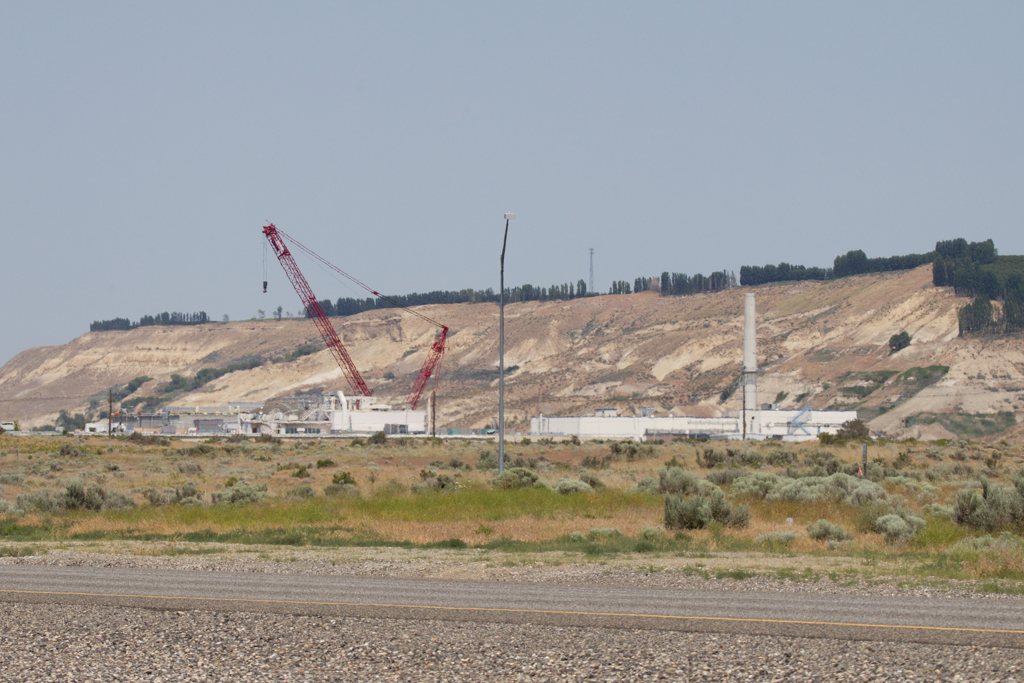
Hanford Facility, Washington

In my last article on the nuclear issue, "Our Nuclear Future, Financial Risk and Externalities",
I discussed Rating Agency Capital Models in the context of nuclear risks such as those posed at Fukushima, Chernobyl and Three Mile Island.

The issue of managing the risks associated with both military and commercial nuclear applications is a vital one, that should interest all of us and speaks to the very concept of externalities and how to manage them in a global world.  In this article I focus on commercial applications.

The Fukushima disaster was impacted by inadequate safeguards.  The tsunami risk was not adequately taken into account in planning where to place the back up generators which could restore power in the event of an interruption of power.  The back up generators were placed at point too near the sea wall protection that left them exposed to the tidal wave action of the large tsunami that hit off Fukushima on March 11, 2011, when an 8.9 magnitude earthquake was experienced.

How do we deal with the risk management issues concerning the financing, construction and operation of nuclear plants, and with the issue of managing nuclear waste from both military and civilian applications?  These issues concern low probability, high risk events, issues that fall outside of the scope of normal everyday events.

The federal government offers nuclear power plants some degree of protection from liability.  These limits on liability, which exist in order to encourage the construction and operation of nuclear plants for power generation purposes, do not do as thorough a job of mitigating risk as they should.  This is because an external party, the federal government, is responsible for the oversight.  In the case of Fukushima, where plants are constructed and operated across national boundaries, the issues become more complex.

The Fukushima Daiichi nuclear power plant was constructed and operated in Japan, by Fukushima General Electric (GE), Boise, and Tokyo Electric Power Company (TEPCO).  The components of the nuclear plant were provided by contractors such as GE,which provided six GE nuclear reactors. Other contractors were also involved. Multi-national resources were employed.  Liability issues are very difficult to ascertain.  It is very probable that the loss of the ability of the generators to provide power after interruption in service due to the tsunami materially impacted the fate of the nuclear material in those reactors and magnified the effect of the event.

Management of these issues across national boundaries presents a serious issue.  How do you price for risk when governments put caps on liabilities?  It is easier for companies to price for risk when the risk is limited!  The incentive for commercial entities to manage risk is reduced when they do not have to absorb the risk of extreme events in either pricing of their products, mitigation of that risk, or the application of design elements to manage that risk. The risk is shifted to the governments.

When all else fails, due to the failure to put in place elements that will mitigate extreme risk, governments have to step in.  At this point, governments must ascertain their own issues of financial accountability and debate among themselves.  This issue is currently unfolding as nuclear radiation emerges from the Fukushima disaster and manifests itself in the ocean, carried by currents, and in the air, as was the case with the Chernobyl event.

Clearly, there must be a better match between potential liabilities and mitigation of risk.  The problem occurs when it becomes financially unfeasible for companies to price for the risk of very low probability, high risk externalities.  The government(s) must retain the capability to regulate.  History has shown that government regulation is difficult in the face of corporate profits.  This was shown in the history of seeking to regulate the ASARCO smelter.

Nuclear power plants do not arise ex nihilo. They must be financed, built, insured.  How do you finance nuclear power plants?  They can be built with government financing and the government can assume all the risk.  In a commercial enterprise, across national boundaries, private parties can finance nuclear power plants if they have sufficient funds and can insure the risk of loss, either by commercial carriers, government support or by self insuring.

There are many financial instruments that may be available to finance nuclear power plants.  In addition, nuclear power plants require real estate.   A component of a nuclear power plant can conceivably be moved from one site to another, yet the ground below stays, and is subject to the risk of contamination.

It is instructive to look back at the history of Nuclear Power Plant generation in the Northwest.  The situation with Washington Public Power Supply System Bonds is instructive (WPPSS).  An article from HistoryLink.org discusses this history of one of the largest bond defaults in history.  Five WPPSS power plants were envisioned, and WPPSS power plant 2, the Columbia Generating Station, survives.  The facility is now called Energy Northwest, and produces 12% of the power generated by the Bonneville Power Administration.

A great portion of the Northwest's power supply is generated by hydroelectric sources such as those operating along the Columbia River.

The discussion of financing nuclear power plants rests with a projection of bond default experience over time (default matrices), and how bond ratings emerge through Rating Agency models such as Standard and Poor's, Moody's and A.M. Best.

Clearly, the issue of using bonds to finance nuclear power plants is a critical one, in more than one way.  WPPSS financing has provided an example of the risk of building nuclear plants, financing them, and having companies such as insurers and banks assume the risk of financing them.

Financial institutions take risks when they purchase company bonds.  The construction and operational risks (there are separate bonds for construction and operation) are borne by those that purchase the bonds.  Riskier enterprises are assigned a risk premium that is reflected in the interest rate offered on the bond.  The riskier the enterprise, the higher the interest rate, and the longer it takes the enterprise to retire the bond.  This is basic economics.

Given the history of WPPSS, it is difficult to construct a model for financing nuclear power plant construction.  History has shown that even rating bonds for more ordinary applications, is fraught with risk.  The financial events of 2008 have demonstrated to us how the domino effects of  certain companies being taken down can bring a financial system to the brink.  It is clear that certain financial institutions were allowed fail, while others were bailed out by the government.  Insurer AIG, for example, was bailed out, while Washington Mutual was allowed to fail.  This is a very interesting aspect to investigate, since Chase was left purchasing and holding the assets that Washington Mutual had accumulated over time.

The 2008 financial collapse is another blog article, however it is instructional in how bond defaults can bring down a financial system. Suffice it to say that mortgage backed securities, collateralized mortgage obligations, credit default swaps (CDS's) and collateralized debt obligations (CDO's) played a large role in this collapse. These issues reflected the financial arbitrage reflected in Rating Agency and regulatory agency capital analysis of financial institutions.  The actions that the government took, in deciding which institutions to rescue and which institutions to allow to fail, helped determine the path that would be taken.

Rating Agencies played a large role in the events that unfolded.  I have discussed Rating Agencies in previous articles.

Clearly, nuclear financing issues present complexities beyond those presented by other issues financed by our market system.  There are limits to liability that impact the nuclear arena.  We are left, then, with a cooperative issue impacting the ways in which governmental regulatory agencies can interject themselves into the system and regulate in a manner to mitigate low probability high impact risk.

This takes us again back to the past, and the issues attendant in regulating ASARCO Smelter Emissions and the problems that this issue presented.

These are the issues we face in these times of global warming and climate change, as we consider the risks and benefits of financing nuclear power plants.  Alternative energy sources are discussed in my article "Global Warming and Climate Change - Polar Pioneer" .

We must consider the issues of regulatory government as it is juxtaposed with issues concerning market operations, in dealing with situations that involve low probability, high risk events.  It is clear that unfettered market operations may bring about market collapse through the interrelationships that exist within the structure of markets. It is also clear that government regulation that is not strong enough may not be able to counter the impact of market forces that overrun it, especially considering the profits that can be developed in certain markets.  Furthermore, it is clear that government forces may act in a manner contradictory to public interest by choosing winners and loser, perhaps steered by an array of  predefined values of certain groups.

Can we trust government?  We must have checks and balances.  Do we want government to only have one option, or to offer choices?  I'm in favor of choices, as choices facilitate change, which is needed. Market research has shown that people can tolerate only so many choices; this has been in areas such as bottled peaches, cereal, etc.  Would we ever want our choices in cereals and bottled peaches to govern our choices in power generation and other key areas?  No, however the analogy is instructive.

We need a government strong enough to regulate; the problem in regulation, however, has shown that it is difficult for regulatory agencies to keep up with the profits that can be made from activities under investigation.  This is certainly true in the financial arena where new instruments, especially those employing financial arbitrage, arise in order to present profit opportunities that defy regulation.

Constitutional issues such as due process and informed consent are bell weather issues in our financial and social system.  The Justice Department has a long storied history in regulating monopoly.  These are all important issues as we consider regulation of markets, intrusion of regulators/law enforcement into markets, and imposition of systems which defy Constitutional rights.

These issues all reflect ongoing issues of climate change and global warming and the effect of the environment on certain populations.

Our Constitutional rights are now under attack and must be defended, especially as regards issues of due process and informed consent.  I have made a thorough examination of the social processes existing in our society today and find material flaws in social systems.

Social systems and the justice system as they currently exist need serious reforms to enforce the Constitutional rights that we hold so dear to us, as do imposed belief systems.


marilyndunstan.blogspot.com

Our Nuclear Future - Financial Risk and Externalities
Our Nuclear Future - Hanford and Spent Nuclear Fuel
Global Warming and Climate Change - "Polar Pioneer" and Arctic Drilling
Chernobyl 25th anniversary 
Energy Choices and Risk
Global Warming and Climate Change-Polar Pioneer
Processing Risk and Uncertainty
Log in the Surf - 8.9 Japan Earthquake (9.0 updated)

History Link.org
Washington Public Power Supply System

Friday, August 7, 2015

Financial Rating Agencies and Risk - Liquidity

Iceberg, Weddell Sea, Antarctica

Updated 9/5/2015:
 
I took this photograph from the Icebreaker Kapitan Khlebnikov, as we transited the Weddell Sea from the Ice Shelf of Halley Bay to the Antarctic Peninsula.  Antarctica (map) is a land of beautiful desolation, and I was able to capture nature photographs depicting its stunning landscapes and the wildlife that inhabits it.  Many countries have stations in Antarctica and I was honored to be able to visit two of them, Neumeyer (German) and Halley Bay (United Kingdom).  

Icebergs have powerful symbolism, expressing concept in many different venues.  In the maritime sense, they represent hidden risk, as ten percent of the iceberg may be visible, the remaining ninety percent of the iceberg underwater.  The Titanic collided with an iceberg in the mid-Atlantic in 1912 and is an example of risk associated with transiting areas with icebergs.  These powerful metaphors or concepts can also be expressed in other venues, including the financial arena, where risk exists and may be hidden, subject to the impact of financial bifurcation points.  

Chaos theory discusses how financial risk, and bifurcation points can reflect hidden factors which sudden express what we term "Black Swan" risk events as typified by Mohamed A. El-Erian's work.

In the financial arena, these risks reside in financial rating models.  My June, 2015 article, Financial Rating Agencies and Risk, discusses Rating Agency models in the context of jet engines, which operate under a wide range of atmospheric conditions. Similarly, financial vehicles are tested under a wide range of scenarios, by various entities such as Rating Agencies and regulators in a wide variety of fields, including banking and insurance, under different legal constructs and governmental agencies.

As discussed in my article, Financial Rating Agencies and Risk, different Rating Agencies, such as Standard and Poor's and Moody's may reflect their analysis of risk in different ways.  General Electric (GE) is used as an example in my blog article. which discussed Standard and Poor's maintenance of GE's rating in the light of its decision to divest itself of real estate assets and exit its GE Capital Finance arm.  Moody's, however, downgraded GE on its decision, indicating GE was favoring equity investors over creditors.  These rating decisions reflect different decision processes by Rating Agencies, not explicit government agencies.  However these Rating Agencies have considerable impact over the manner in which financial decisions are reflected in the marketplace.

Clearly, there is hidden information which Rating Agencies, and governmental entities, are aware of.  When there is a relationship between Rating Agencies and financial entities, as in the payment of a fee in exchange for a rating service, there is an incentive for the Rating Agency to monitor the actions of the company, as money has changed hands, and participate in the decisions of the company involved.. At some point, however, the economic prospects of the company do not warrant the degree of risk assigned to it, and the Rating Agency may choose to exercise a number of financial tools in order to maintain its credibility in the financial marketplace as a reliable partner in assessing risk.

You see, the Rating Agency has two major clients; one, those purchasing its evaluations of companies, and another, two who pay for its services in order to exchange information, maintain a rating as to its financial soundness, and exchange information in order to do so.  Government agencies are a different entity involved, and they sit and cast a watchful eye over the ability of Rating Agencies to remain impartial; they are also concerned as to the ability that Rating Agencies have to move the markets, and, especially, their ability to impact major market moves that could mask efforts at financial or other types of terrorism.

This is where the increased complexity of emerging financial instruments presents a risk for regulators as they seek to keep up with new financial structures and derivatives such as special purpose vehicles, credit default swaps (CDS) and collateralized debt obligations (CDO's).  The Treasury, certainly, is interested in attack on the financial system.

A company does not exist in a vacuum; it exists within a financial structure of ever increasing complexity, reflecting not only national considerations, but a world economic milieu of globalization that impacts its decisions, as nations develop and industries expand, contract and relocate or adopt new methodologies such as outsourcing.  Externalities are always a consideration, and this this issue is discussed in my blog article of the same name.

This brings us back to the iceberg and the hidden factors. GE presents an interesting case study as we look to parse the actions of Standard and Poor's and Moody's in their rating of GE.  My blog article, Our Nuclear Future - Financial Risk and Externalities briefly discusses the issue of the six nuclear plants designed by GE, which were part of the Fukushima Daiichi Nuclear Site's design.  The interesting question is the use of ratings in conjunction with the use of chaos theory and bifurcation points to bring down the economy and financial system.

There are specific provisions (options) in financial agreements that allow a company to take action in the case of certain events such as ratings downgrades.  This puts a particular onus on Rating Agencies who have access to company information; it also presents a challenge to companies being rated as they seek to understand the processes which rating agencies use to rate their companies.

The interesting question in analyzing GE in the light of its departure from GE Capital, which finances GE engines, and from real estate, is its liquidity position and its exposure to risk from liquidity events in the light of the various risks that its operations faces.

Indeed, liquidity is an important consideration in analyzing a company's financial soundness.  An example where liquidity events have taken down companies is General American Insurance, where exposure to risk from institutional investors brought down the company.  General American had high exposure to funding agreements, which allowed policyholders to exercise a put option (withdraw funds without penalty) upon the adverse action of Rating Agencies. The construction of funding agreements involved mark to market issues and the use of put options in mutual funds (7 day put options).  Moody's downgraded General American's insurance financial strength rating from A3 to Ba1 on August 9, 1999.

The interesting question with the actions of Standard and Poor's and Moody's with regards to GE is the divestiture of the GE Capital financing arm and the Real Estate assets; both of these events seem to reflect a move to better match projected assets and liabilities by increasing liquidity, potentially in the light of anticipated liabilities.  These are the hidden, or unknown issues that confront regulators.

Why discuss GE?  With issues of climate change and global warming, jet engines, which operate under a wide range of atmospheric conditions utilize various fuels for combustion under a wide degree of parameters representing different aspects of aviation usages, including private, commercial and government use. My blog article on the Polar Pioneer discusses these issues in the light of exploration and drilling for petroleum products in the Arctic. The availability of fuel and the mode of combustion and types of engines employed will always be an important characteristic of any decision process as we analyze our future options.

Many people have contributed to the issues discussed in these blog articles and I express my appreciation to them and to their contributions.

Liquidity issues are important factors in assessing financial risk.  They represent one category of risk among others that can reflect bifurcation points which can impact the economy.  Organization structure is also important, as indicated by the Barings Bank issue where Nick Leeson was involved on both sides of the house, trading and operations.

Alamy.com - Risk Lightbox

marilyndunstan.blogspot.com:

Wikipedia:

Maps:

Rating Agencies:


General American Insurance:

GE:


Tuesday, August 4, 2015

Our Nuclear Future - Financial Risk and Externalities

Hanford Site, Washington


In my blog article, Our Nuclear Future - Hanford and Spent Nuclear Fuel, I discussed energy issues, focusing on risks associated with nuclear power plants. and including the risks associated with spent nuclear fuel.

Risks associated with oil drilling are discussed in my article about the Polar Pioneer, 
Global Warming and Climate Change - "Polar Pioneer" and Arctic Drilling.  These risks increase as oil consumption and resources are impacted by peak oil considerations.

Nuclear power plants also pose financial risk.  I address this issue in my blog post,
Energy Choices and Risk.  This issue is a matter of continuing investigation as we look towards issues of financial risk management, and the costs  imposed on society and individuals as discussed in my blog article Externalties.

In my blog article, Financial Rating Agencies and Risk, I discussed Rating Agency Capital models, using a conceptual model of jet engines as an analogy.  Fuel and energy are important components of growth and development, and the ability to test a jet engine for the proper mix of fuels that permit combustion under a wide range of situations provides a useful model to compare to the type of modeling required for financial stress testing.  In that article, I discussed General Electric (GE)'s Ratings in light of its decision to exit its GE Capital finance arm and divest itself of real estate assets.

The actions of Rating Agencies Standard and Poor's and Moody's are interesting in light of the issues concerning Fukushima and the use of six GE nuclear reactors in the Fukushima Power Plant.


marilyndunstan.blogspot.com
Our Nuclear Future - Hanford and Spent Nuclear Fuel
Global Warming and Climate Change - "Polar Pioneer" and Arctic Drilling
Chernobyl 25th anniversary 
Energy Choices and Risk
Global Warming and Climate Change-Polar Pioneer
Processing Risk and Uncertainty
Log in the Surf - 8.9 Japan Earthquake (9.0 updated)

marilyndunstan.photoshelter.com


Wikipedia:
Peak Oil
Fukushima


Sunday, July 12, 2015

Israel and Akiva Tor


Potato Latkes with Apple Compote

I attended a talk given by Akiva Tor, Israeli Northwest Consul General, San Francisco Consulate, given November 3, 2010.  It was very interesting to hear Mr. Tor speak regarding the very compelling issues in the Middle East.  Mr Tor was very earnest in seeking to work with the American government to deal with common areas of interest.  Mr Tor spoke regarding the necessity of maintaining Israel's national security and hoped to find a way to ease the emergent problems in the settlements.

Mr Tor is now Director for Special Projects, Israel Ministry of Foreign Affairs.  An article in JWeekly.com discusses his term as Northwest Consul General.  Mr Tor has an interesting background and his service has ranged from involvement in the community, to film screening sessions, to museum openings.

What interests me most about Mr Tor's stint as Northwest Consul General, is his involvement in aiding U.S. government interests in divesting in companies which do business with Iran.  As the articles states, lawmakers had already passed a bill mandating that CalPERS and CalSTRS, (State Pension Funds) "divest from companies doing business with Iran. However, compliance and enforcement had been lax".

I find the issue of divestment very interesting and compelling.  I understand well the fiduciary issues that confront plan sponsors. Indeed, fiduciary responsibility in pension funds is a compelling issue to many retirees.

 This issue is very important in pension plans where the Pension Benefit Guaranty Board (PBGC) operates as a U.S. Government Agency.  The Pension Benefit Guaranty Board Annual Report for 2014 depicts its operation.  The PBGC provides coverage for private sector single employer and multi-employer plans.

Washington State's Pension Plans have had issues with KKR and WAMU. according to this article in the Seattle Times. Recently, KKR settled fees with the SEC that has impacted the Washington State pension system, as well as others.

Indeed, it is interesting to note the cascade which erupted from the chain of failures in 2008.

This takes us back to the issue of Mr Tor and divestment.  For the individual investor who wishes to invest in stocks, the issue of what to invest in has particular meaning. Some products may be repugnant to certain investors and those investors may wish to avoid stocks or mutual funds that include them. This is called "social investing".  This is becoming increasingly difficult in today's society when conglomerates operate to market many products, some of which a particular investor might find distasteful.

The issue of divestment as a financial tool is an interesting one in today's society worthy of additional study as the method of divestment is being used by more and more groups, generating more and more difficult problems of attribution.

In an increasingly complex society, many of these issues cross boundaries and become caught up in the intricate issues of global warming and climate change which confront nations across boundaries.

Congressional Budget Office - The Risk Exposure of the Pension Benefit Guaranty Corporation
Pension Benefit Guaranty Corporation - Wikipedia
Seattle Times - State's Pension Fund Bets Big on Private Equity
Pension and Investments  - Settlement of Charges with SEC over Fees
State's Pension Plan Bets Big on Private Equity - Seattle Times

Wikipedia:
KKR
Washington Mutual (WAMU)

Monday, June 22, 2015

Financial Rating Agencies and Risk


Pratt and Whitney J-58 Engine, Lockheed SR-71 Blackbird,
Museum of Flight, Seattle, Washington


How will a recent settlement of a Justice Department suit against Standard & Poor's Rating Agency impact the Rating Agency's assessment of companies that it rates?  With many companies having calendar year financial year ends, this is an emerging question as the various Rating Agencies reviews ratings.

The Justice Department is investigating Moody's Rating Service. The Moody's and Standard and Poor's suits are related to fraud in mortgage backed securities.  Mortgage backed securities experience contributed significantly to the financial crisis of 2008.  The U.S. Justice Department worked with State Agencies in filing the suits.

A recent example of the impact of credit ratings is shown by Standard & Poor's affirmation of General Electric's Credit Rating at AA+ in the wake of its earlier announcement to exit its GE Capital Finance arm and divest itself of real estate assets, as reported in Marketwatch.

Meanwhile, Moody's Investor Service downgraded GE on that decision, concerned about favoring equity investors over creditors. GE Capital has a history of aviation financing, as well as an interest in the future of aviation, as in supersonic flight.

It is interesting to note the responses of the two Rating Agencies in this particular case, in the light of Justice Department investigations and emerging circumstances in the financial markets.  What does the future hold in store?

In addition to the financial circumstances surrounding GE, and in particular, GE Capital, it is interesting to consider that jet engines might serve as a useful metaphor for emerging issues in the financial sector, and for Rating Agencies in particular.

A number of years have passed since the financial crisis of 2008.  In a previous blog article on August 22, 2011, I discussed the downgrade of  United States Long Term Sovereign Credit from AAA to AA+.  In this article I discuss some of the issues involving Rating Agency and other capital models.
Capital models are complex analytic models designed to measure the soundness of institutions.   The U.S. Justice Department has been evaluating a number of rating agencies to assess their impact on the financial markets and their adequacy in measuring company risk.

Generally, capital models look at total capital available and compare it a risk based capital measurement.  The risk based capital measurement is a formula based on the risks a company assumes in its various lines of business, assigning weighting capital factors to measure important items such as asset risk, insurance risk, asset liability/matching risk, business risk and other factors.  These types of measurements vary considerably between different types of business.  Depending on the use of the capital model, the structure of the model and the types of metrics used, the factors, and the analysis will differ considerably from institution to institution.

Rating Agencies serve to provide information to investors that help them decide whether to invest in a company.  Thus the analysis of a rating agency focuses on issues of financial soundness, potential for growth, and a wide variety of issues that are of interest to potential investors, in both debt and equity securities.  Rating Agencies include such agencies as Standard & Poor's, Moody's, A.M. Best and Fitch.

Rating Agencies perform valuations of companies. Rating Agencies will provide a rating for a company based on data readily available through public sources.   However, in order to have a comprehensive financial evaluation, Rating Agencies typically require a fee to be paid which will enable the company under valuation to interact with the Rating Agency, allowing it greater access to information obtained by the Rating Agency and more sharing of information.

Rating Agency models will differ from models used by regulators to assess financial soundness.  For example, state insurance commissioners who regulate financial soundness of insurance companies will also model risk based capital.  Their analysis,  however, is focused more on solvency issues than indicators of growth to potential future investors. This is because state guarantee funds, which insurers pay into, are regulated by the states. State guarantee funds provide some funds according to regulation to certain classes of policyholders in the event of insolvency. The downside risks and upside benefits are different for regulators versus the various classes of investors interested in a company.

Because the focus of capital models vary widely according to the use for which they are intended, they tend to produce different types of results.  Regulatory models might be established through cooperation between certain government or quasi-government-private bodies that seek to promote some degree of uniformity (.e.g. the National Association of Insurance Commissioners - NAIC).

Private Rating Agency models by such major players in the system such as Standard & Poor's, Moody's, A.M. Best and Fitch will vary because each of these rating agencies are seeking to gain business by rating companies and each has developed its own model. This is called competition. Thus when a company is evaluated by rating agencies, their rating may vary between different rating agencies.  This is because different rating agencies will weight various activities differently than others.

Rating agencies have a considerable amount of power to impact the way in which a company is viewed in the marketplace.  The specific metrics and factors used by a rating agency to judge a company may impact whether a company gains or loses business and may influence a company's decisions.  An action by a rating agency to downgrade a company may result in the company losing a considerable amount of business, and even cascade that company to failure.

There is a certain psychology at work in companies dealing with rating agencies.  Because companies have an opportunity to gain a more favorable rating by interacting with a rating company if they pay a fee to have a more comprehensive analysis, the two entities are now bound by some sort of cooperative relationship (symbiosis) whereby it is in the interest of the rating agency to keep getting the fee.  The rating agency, however,to ensure its credibility, needs to report adverse conditions that may lead to failure of the rated company at some point.  Thus the rating agency is on the horns of a dilemma, whereby it must at some point act to ensure the credibility of its ratings.

However Rating Agency models are just that, models, and models may not take into account all the protective factors that companies use to ensure continued operation.  Rating Agency models reflect the biases of those who engineered them and may reflect psychological factors such as confirmation bias and cognitive dissonance.

The ability of a Rating Agency to cascade a company downhill towards failure,  into the hands of investors ready to swoop it up at bargain prices, may hinge on the use of specific metrics and factors which are keyed towards certain predetermined models or results.

A Rating Agency model, like the companies it rates, are very complex models.  Perhaps a jet engine is a suitable metaphor, in terms of complexity, in considering how such models operate in an ever complex world where problems such as climate change and global warming loom ever larger. My recent blog articles on the Polar Pioneer and Seattle-Tacoma International Airport discuss some of these issues which may impact aviation.

A jet engine such as the Pratt and Whitney J-58 engine, operating in conjunction with the titanium-skinned aircraft itself, a SR-71 Blackbird, needs to be able to operate in a range of atmospheric conditions reflecting different atmospheric pressures, levels of oxygen and carbon dioxide, and under various heat constraints and mechanical stresses.  The pilot's own physiological and psychological stressors are of paramount importance in such an environment, which includes exposure to a variety of environmental hazards, in various feedback modes.

It is in this context that we consider Rating Agency models not simply as a static model based on year end performance or occasional interaction with companies they rate but also a dynamic model that must take into account many complex factors and interactions in an environment where physiological and psychological stress tests, as experienced by test pilots, operating in a real environment may be the most dangerous elements, especially when so many unknown factors must be taken into account.

Many companies perform complex modeling analyses to stress test their operations under a range of potential situations.  The question is how Rating Agency models reflect the balance of risks and who, in this complex society is actually directing the emergence of results.

These are all very significant issues as we live in an interconnected society, perched on a bifurcation point of climate change and global warming, that has impacts on many sectors of the society, and, in fact the planet.  Externalities and systemic risk are major factors in our ever changing society as we address issues that go beyond individuals, corporations and governments.

Fuel and energy sources are important factors in a global economy, issues that affect many on a personal scale, in many ways that many not suspect, due to their ever increasing complexity. Rating Agencies, and their impact on society are but one of a number of factors influencing the outcomes of these very important issues as we tackle these significant problems.


Sunday, May 31, 2015

Bacillus Anthracis Issues


The CDC is investigating an unintentional release of anthrax  from the Department of Defense (DOD) to multiple labs in multiple states.  An article from Voice of America indicates 24 labs in 11 states and 2 countries (South Korea and Australia) have received "suspect samples" of concern.

Anthrax has quite a history, both in its naturally occuring state and as a biological weapon, as documented by the Center for Disease Control (CDC).  There have been a number of anthrax "releases" over time,  Recently, in 2014 there was a release at CDC's Roybal Campus .  The year 2001 saw a wave of anthrax attacks.  A CDC review discusses the 2001 attacks in some detail as well as discussing epidemiological findings. and provides a history of anthrax., both in a naturally occurring state and as a biological weapon.

One interesting development has been the appearance of bacillus anthracis in heroin used by European drug users.  The strain involved originated in Turkey, raising a question as to how bacillus anthracis would get into the heroin supply.

The CDC provides basic information on Bacillus Anthracis.  The bacteria Bacillus Anthracis exists in a dormant, sporulated state in nature, can enter the body by a variety of routes (e.g. cutaneous or inhalation pathways), become activated, spread throughout the body, multiply and produce toxins.

These incidents all represent an interesting pattern in the release of bacillus anthracis into the biosphere, taking into consideration emerging environmental issues regarding climate change.  The question is to what extent the environment adapts or reacts to environmental challenges thrown its way.

As this CDC case investigation indicates, it is difficult to investigate individual cases of anthrax when they occur.  Human cases of anthrax are rare, despite the fact that Bacillus Anthracis can be found naturally in the soil and commonly infects domestic and wild animals throughout the world.  There may be a number of reasons for this apparent paradox, which is under investigation.

My blog article "Panspermia and Evolution" discusses Bacillus Anthracis and the distribution of life in the context of extreme environments.  These are the types of situations involving low probability, high impact events.

Bacillus Anthracis is mentioned in a few of my blog articles, "Evolution of Adaptive Immunity" and in an article on "Ebola".

Bacillus Anthracis needs oxygen in order to sporulate.. This is a very interesting characteristic that may provide clues to it's activity, especially in the human body. Iron is a key element in the human body, intimately associated with a number of metabolic processes, including its role in hemoglobin and the delivery of oxygen throughout the body.

Indeed, Bacillus Anthracis uptakes iron when exposed to superoxide stress.   Bacillus anthracis experiences rapid sporulation in a high iron, glucose free environment.  Apparently, Bacillus Anthracis may operate as a signaling mechanism triggering iron accumulation when exposed to environmental stresses, impacting the iron catalyst of the  Fenton reaction.

Transferrin blocks growth of Bacillus Anthracis via iron deprivation, an effect that is differentially expressed in cutaneous anthrax vs inhalational anthrax. This difference, in the latter case, is due to phagocytosis by macrophages, a process which occurs upon inhalation, allowing the inhaled spores to germinate intracellularly, multiply and cause infection.

It is apparent that Bacillus Anthracis forms the heart of a mystery, a challenge, as we seek to better understand the manner in which it expresses, affecting a number of medical processes in the human body. At the same time, we examine other issues impacting society on a global level, issues of climate change, global warming and their interactions with the changing environment in which we live.  These issues will be discussed in further blog articles.

Center for Disease Control (CDC):
  CDC Investigating unintentional DoD shipment of anthrax
  Anthrax
  A History of Anthrax
  CDC Director Releases After-Action Report on Recent Anthrax Incident
  CDC Responds to Anthrax - 2001
  Review of Fall 2001 Anthrax Bioattacks
  Injectional Anthrax in Heroin Users - 2000 -2012
  Anthrax - Basics
  Investigation of Inhalational Anthrax Case - United States

Voice of America -"Carter Vows to Find Those Responsible for Anthrax Shipment"

American Veterinary Medical Association (AVMA) - Anthrax FAQ

marilyndunstan.blogspot.com
   Panspermia and Evolution
   Evolution of Adaptive Immunity
   Ebola

Medical Microbiology - Bacillus
Journal of Bacteriology - Cellular Iron Distribution in Bacillus Anthracis
Journal of Microbiological Methods - Rapid Sporulation of Bacillus Anthracis in a high iron-glucose free media
Journal Biological Chemistry - Human Transferrin Confers Serum Resistance Against Bacillus anthracis

IUPAC - Gold Book - Fenton Reaction

Wikipedia:
  Oxidative Stress
  Phagocytosis
  Macrophage


Saturday, May 30, 2015

Global Warming and Climate Change - "Polar Pioneer" and Arctic Drilling


The visit of the Royal Dutch Shell's Polar Pioneer Oil Drilling Rig to the Port of Seattle's Terminal 5 in May, 2015 sparked demonstrations against drilling for petroleum products in Alaska's Chukchi Sea, and helped to focus attention on environmental issues, the use of energy resources, externalities and systemic risk.

Energy resources include petroleum products, nuclear energy and alternative energy sources such as solar, wind power, biodiesel, ethanol, hydro and other emerging energy sources.  The Polar Pioneer and other Arctic drilling operations are concerned with the development of petroleum resources as the planet deals with exploration for additional sources of petroleum.

Alaska's Chukchi Sea,  high in the Arctic, above the Alaska Archipelago, is a marginal sea that sits between Russia and Alaska and is navigable only four months out of the year.

There are many risks involved in drilling in the Arctic.  Past oil spills, such as the Exxon Valdez oil spill in March, 1989  highlight the risks involved with drilling in such a hostile environment where repairs, mitigation and cleanup are much more difficult.  Storms, ice, extremes of light and darkness and other climatological issues present challenges.  The opening up of Arctic areas for shipping also presents a long term challenge in a number of ways; this risk includes not simply the risk posed by the oil drilling activities themselves but ancillary activities that support these activities as well as other commercial activities.

There is the risk that sea lanes could interrupt the ability of sea ice to reform.  Sea ice, with a high albedo (reflectivity index between 0 and 1) , helps to counteract planetary warming. As anyone who has tried to bake an egg on a hot black asphalt knows, black surfaces absorb heat and white surfaces reflect it, and a decrease in sea ice is associated with positive feedback mechanisms that increase global warming.  Preserving the Arctic ice in the face of increased commercial traffic is a very important element in ensuring planetary balance.

Is it possible that the planet is finding its own way towards an equilibrium, as we sit and ponder our options?

In 2012 a phytoplankton bloom was discovered floating in the Chukchi Sea between Wainwright and Barrow, Alaska.

Set in the context of climate change, involving long term planetary forcing mechanisms such as the Milankovitch Cycle  and global warming, population growth, globalization, and development of emerging economies, the use of energy resources is an important topic.

Could this bloom be a mechanism for mitigating the increase in atmospheric carbon dioxide?   Phytoplankton account for "half of photosynthetic activity on Earth", according to NOAA.  The presence of extensive blooms of the fern Azolla in the Arctic Ocean are associated with the emergence of an ice age in the middle Eocene epoch (Azolla Event) 49 million years ago, which transformed the Earth from a "greenhouse" to an "icehouse".   Blooms have varying ability to sequester carbon dioxide, as indicated by the Azolla foundation.

The appearance of algal blooms in the Chukchi Sea may be an early indicator of planetary compensatory mechanisms to deal with the increase in carbon dioxide and other greenhouse gases (including methane and water vapor ) in the atmosphere, and rising temperatures.

The issue of drilling in the Arctic's Chukchi Sea is thus an important issue that doesn't simply entail the issues of how to drill in such a hostile environment without disturbing it, but also is set in the context of a bifurcation point with regards to issues of planetary balance.


Past articles from my blog on environmental issues and the issues of externalities incude:

Externalities and Risk - The Seattle-Tacoma International Airport
Climate Change and Carbon
Seattle-Tacoma International Airport - Environmental Issues (one of a series on the airport)
Climate Change and the Thermohaline Circulation

Marilyn Dunstan Photography

Sunday, April 19, 2015

Seattle-Tacoma International Airport - Medical Issues

Seattle-Tacoma International Airport, Third Runway,Sea Tac, Washington

Examination of the impact of the Seattle-Tacoma International Airport on the region poses a number of analytic challenges.  In a previous blog article, Seattle-Tacoma International Airport - Pollution, I discussed pollution issues.  Links to my other blog issues on the airport may be found listed below.

The focus of this blog article is on health related issues which may be related to airport operations, keeping in mind that there are other sources of pollution that may contribute to health conditions, and that there are factors other than environmental conditions which may contribute to health conditions.

Other sources of pollution may include vehicular traffic, such as cars, trucks, vans, buses and rail systems, as well as industry and commerce as well as other human activity such as wood burning. Many factors, in addition to pollutants, contribute to health.  Economic and sociological factors such as poverty, education and disenfranchisement all are factors which influence health.

There is considerable information available from the King County Health Department on the geographical distribution of various medical conditions.  These are listed below. Incidences of cancer, respiratory disease, cardiac and pulmonary heart conditions vary throughout the county.

MEDICAL ISSUES

Known
  • A number of medical conditions may be impacted by environmental factors, including cancer, respiratory/pulmonary,sleep disorders,  blood/vascular disorders, immune system disorders, cardiac disorders and neurological/psychiatric/psychological issues that can emerge as a result of increased environmental exposure. The impact of air pollution on the generation of reactive species such as oxygen and other radicals may also adversely impact sleep states.
  • Environmental pollutants often increase generation of reactive species or oxygen radicals, increasing oxidative stress, impacting a number of medical conditions, and may create new ones.
  • Electromagnetic fields (microwaves) - Potential effects vary according to the distance from the source with general public exposure lessened.  Health effects studied include cancer, physiological and thermoregulatory responses, reproductive issues, cataracts, and impacts on calcium ion mobility.  Effects have not been sufficiently established to be able to determine regulatory standards.
  • Studies have been made by the Washington State Department of Health on glioblastoma multiforme and other conditions.
  • A February 25, 1999 report from the State Health Department and King County Health Department indicates: "While the state health department found that the occurrence of all SeaTac Concerned Citizen cancers in the area within 5 miles of the airport was less than expected in comparison to King County, the Seattle-King County health assessment found an increase in cancer deaths around SeaTac Airport."  This study examines health issues in the neighboring communities around the airport.
  • There are extensive studies from the King County Department of Public Health available regarding a variety of health and socioeconomic factors for the communities in King County. These reports indicate increased incidence of cancer and pulmonary disease, but decreased risk of heart attack, stroke and Alzheimers relative to other areas.  There is also a higher degree of cigarette smoking in the region, complicating analysis.  There is a range of socioeconomic indicators showing lower socioeconomic indicators in the region.
Past Legacy
  • One of the cardinal features of evolution is the incorporation of biologicals and minerals into a system in order to advance features that have evolutionary advantage.  This is called biomineralization.  It is not inconceivable that out of the many molecules emitted through airport operations (and other sources throughout the region), that one in the witches brew of combinations might find a home within the human body, evolving the system, or throwing a monkey wrench into it. Calcite enabled the creation of the eye in trilobytes  in the pre-Cambrian.  However a serious problem in this process is the issue of interoperability between systems in such processes.
  • To what extent does the ground on which we sit impact health?  The area holds the legacy of the ASARCO Tacoma Smelter Plume  formed in 1899, and the emissions since that period.  This legacy impacts rock, soil, water and air.  The Seattle-Tacoma International airport sits on a considerable amount of fill, which is in addition any deposition that may have fell on the underlying soil.  Other parts of the region may also have been impacted by sand, rock and gravel transported from sites more heavily impacted by the ASARCO Smelter's operations.
  • The airport sits on Fraser Glaciation,  Vashon Stade.  To what extent do the rocks around the airport and the water affect health? It is possible that the area of the airport could hold some clue to past evolution.  A sloth was discovered in a swampy area north of the airport in 1961, and a mammoth tusk was discovered in the South Lake Union area of Seattle. Both sit at the Burke Museum.  DNA analysis from an archaeological find could perhaps provide scientists with clues to help solve emerging problems germane to our evolution and our ancestors.
Emerging or Unknown
  • The emergence of new and novel health risks may occur in the witch's brew of chemical soup surrounding the airport and other areas subject to environmental risk. Illnesses that normally occur in other areas of the world may emerge in this arena, given the geological milieu in which the airport sits, the meteorological conditions, and the increased levels of pollutants, including carbon dioxide.  Carbon dioxide is a sensitive indicator of global warming and climate change and may also impact the respiratory system in a similar fashion in the immediate neighborhood of the airport.
  • Seasonal flu and emerging viruses, could recombine in the environment surrounding the airport, mixing human and bird migration patterns with environmental factors impacting local populations.  Thus viruses could serve as a vector for the incorporation of novel or emerging features resulting from the witches brew of chemicals.
  • Chemicals emitted in the witches brew of chemical emitted from airport operations could be impacted by solar radiation, a source of energy, especially during periods of geomagnetic storms.  Potentially subatomic collisions could evoke a transitional state in molecules, and be incorporated into the body.  Any impact from the creation of transitional molecules would be in addition to any direct effect from any solar storms.
  • The witches brew of chemicals emitted by air transport, given the power, acceleration, deceleration and forces put on aircraft engines, abrasion, means that more exotic chemicals may be created.  However, it is possible that similar types of reactions may also be occurring in different parts of the region, perhaps to a different extent.
Establishing Correlations between Pollutants and Medical Conditions
  • While some pollutants in particular are points of focus, the extensive lists provided make it difficult to correlate exposures to any one or any combination of health outcomes.  This is an issue of multiple correlation analysis in the face of numerous variables and outcomes, many of which may interact with each other to alter individual correlation between any two variables. 
  • Analysis of risk focuses on cancer metrics.  While the emergence of the cancer risk is important (and critical), identification of other outcomes is also important. Early indicators of future outcomes may serve as helpful markers of environmental distress before its impact becomes too severe.
  • Environmental markers might include blood coagulation measurements, markers for the impact of oxidative stress, markes for nuclear DNA and mtDNA damage, and markers for the preference of glycolysis in cells (Warburg Hypothesis), among other things.
  • Categorization of medical systems, or medical coding, puts medical conditions in "boxes" which may make analysis difficult when causes and/or outcomes cross boundaries, medical conditions are inappropriately categorized or new information informs medicine.
  • The division of conditions into physiological versus psychological causes presents such difficulties, especially when these conditions are subject to such a wide disparity of treatment throughout the existing sociological framework. The bifurcation of conditions into physiological versus behavioral outcomes tends to create categories that diminish or ignore the health and sociological impact of pollution exposure and/or cross category lines.
  • Some indices that represent psychological stress may combine various psychological indicators in a weighting formula that may impede the ability to do correlation analysis on any one factor. One is left with memories of Upton Sinclair's "The Jungle", a book about meat packing plants, wondering how the whole was constructed from the parts.   Thus, the question remains in indices and tests as to whether the manner in which the indices are constructed drive a certain result or whether indices keep pace with changes in their individual components.
  • Occupational and environmental health outcomes are not appropriately measured in a manner that can express the full continuum of types of work that exists in the sociological sphere.  This reflects the existing dysfunctional definitions of work and disability, and impacts correlation analysis between occupational and environmental health.
  • Medical fields studying intersecting fields of study, such as neurology, psychiatry and psychology can come into conflict at times, making it more difficult to study health outcomes emerging from environmental factors. 
  • Definitions based on subjective issues such as behavior and, belief systems, emerge to complicate the analysis of the impacts of environmental pollutants.
  • The drive to cut medical costs conflicts with testing the impacts of increased environmental load on the public, leaving the impacts uncertain and placing the burden on those impacted. 
  • Increased population and economic activity has impacted Western Washington so that environmental risk exists in many places throughout the region, to varying degree.
  • The medical system currently does not provide sufficient support to provide both testing and treatment of medical conditions which may arise from the increased exposure to environmental pathogens. There are barriers to entry into the medical system which impede the ability to measure outcomes and protect human test subjects in the evolutionary process.
  • Assessment of different contributors to morbidity and mortality may confound research into the underlying environmental issues.  An example of this is assessing the contribution of smoking to morbidity and mortality versus the environmental effects caused by airport operations.
  • Different statistical measures may be used by reports, confusing the reader or making it difficult to interpret data shown in different forms;  Data may be presented with an incidence rate (occurrence of a condition in a population over a period of time), a prevalence rate (percentage of a population having a condition at a specific period of time) or mortality rate (percentage of deaths in a population over a period of time).  The US Government publishes data on morbidity and mortality .
The challenge is to put together to what extent the environmental factors drive the medical and  socioeconomic factors and are in turn influenced by them, in a positive feedback loop.

Sources:
Puget Sound Clean Air Agency - Final Report - Puget Sound Air Toxics Evaluation - October 2003
Department of Ecology - Toxic Cleanup Program (ASARCO Smelter Plume)
World Health Organization - Electromagnetic Fields
Port of Seattle - Part 150 Study
Port of Seattle - Groundwater Monitoring
Port of Seattle - Stormwater Pollution Prevention Plan
Scandanavian Journal of Health - Glioblastoma Multiforme
Tacoma Smelter Plume Information - Washington Department of Ecology
King County Community Health Indicators - King County (Top 10 Leading Causes of Death)
King County Public Health -School District Health Profiles
King County Health Profile
King County Public Health - Data and Reports

Blog Articles:
Externalities and Risk - The Seattle-Tacoma International Airport
Seattle-Tacoma International Airport - Environmental Issues
Seattle-Tacoma International Airport - Pollution

Wednesday, March 25, 2015

Externalities and Risk - The Seattle-Tacoma International Airport


Birds, Third Runway, Seattle-Tacoma International Airport

The City of SeaTac held a meeting on March 24, 2015 that included discussons on the Seattle-Tacoma International Airport Sustainable Master Plan by Port of Seattle representatives.   A news report of the meeting can be found on the SeaTac blog.

My comments at the meeting addressed the issue of externalities associated with airport operations and their impact on the surrounding community, especially in the area of health.  Externalties are an important topic in social and economic policy.  An externality is the consequence of an economic activity affecting a party that did not choose to participate in that activity.

There are a myriad of issues surrounding development in the area of the Seattle-Tacoma International Airport.  The airport is an engine of growth and development which brings business into the region, and as a hub, enables the flow of commerce to other areas of the country and the world.  The airport provides economic benefit through the multiplier effect.  The multiplier effect is an economic term to express the economic effect that the introduction of an engine of growth has on the community.

The airport provides jobs to support direct and ancillary airport operations.  As business cluster around the airport (e.g. Car Parks, shuttles), these activities provide an engine for the economy's growth.

However economic activities have costs, as well.  In addition to direct costs to service airport operations, costs may include building more roads to service traffic that serves the airport and other municipal items.

There are a number of externalities arising out of airport operations.  These issues involve air, water and noise pollution, impacts on the respiratory and other health systems, and even sense of smell.   There are psychological impacts, as well, including psychological impacts that express themselves over a wider social framework.

Airport externality issues are felt on a local basis, by those living at the edges of the airport, nearby, those under flight paths and on a city level as cities adapt to the challenges presented by the airport's growth. While these externalities are felt most acutely locally, they are also expressed over a wider distance throughout the region as the area struggles to deal with challenges presented by increased commercial and passenger activity.

I list blog articles regarding  externalities in a variety of areas (below) to establish a context within which the impact of the airport can be viewed as an individual example of an externality.


"Externalties"
 "World Air Pollution Organization Report on Air Pollution and Health"
 "Climate Change and Global Health"
 "Avian Flu"
"Mt Rainier Balance of Risks"
 "Nuclear Balance of Risks"
"President Ronald Reagan and Alzheimer's Disease"

Saturday, February 21, 2015

Climate Change and Carbon


Global Warming and Climate change are important topics.  Recent talks at the United Nations have highlighted the concern about these planetary issues that go beyond borders and seek to unite people in discovering means to solve the emerging problems.

The United Nations climate change site indicates that 2014 is on track to being among the hottest on record.  Christiana Figueres, Executive Secretary of the UN Framework Convention on Climate Change states "Fortunately our political climate is changing too with evidence that governments, supported by investors, business and cities are moving towards a meaningful, universal climate agreement in Paris 2015 - an agreement that keeps a global temperature rise below 2 degrees C by putting in place the pathways to a deep de-carbonisation of the world's economy and climate neutrality or 'net zero' in the second half of the century."

A recent article in Scientific American discusses United Nations climate talks in Paris last December. As the article indicates "(The planet's surface has warmed about 0.85 degrees C (1.5 degrees F) since 1880, worsening floods, storms and deadly heat waves.) The 2 degrees C target has since become a keystone goal of the negotiations."

NASA's, Global Climate Change: Vital Signs of the Planet displays information about climate change. including graphs and latest measurements.  This information shows steadily increasing recorded carbon dioxide levels in recent history, with inputed history obtained from ice cores indicating significant variation from historical levels over three glaciation periods. Ice cores have been drawn from the Arctic, Antarctic and mountain glaciers.  The measured value as of January 2015 showed 399.73 parts per million (ppm), just under 400 ppm. At current rates it should exceed 400 ppm in February 2015.


 NASA's Climate Change site provides information on Global Temperature.  Five year averages in global temperature are measured relative to a 1951-1980 average temperature baseline, indicating a dip in global temperature around 1910 and a steady rise since then.

Global Warming concerns have fostered considerable research  on climate change issues, seeking ways to mitigate the impacts of climate change, providing potential solutions.  Climate change and environmental issues have been addressed at local, state, federal and international levels.   The CIA World Factbook provides a list of Current Environmental issues and international agreements which countries listed are a "party to" and/or "signed, but not ratified".

I discuss some of the issues relating to climate change, including global health in other blog articles relating to Climate Change and Global Health  and Avian Flu.

Carbon, and especially carbon dioxide are sequestered in a number of areas on the planet, including in the rocks and in the oceans.  Other greenhouse gases, such as methane, are sequestered in areas such as Arctic Tundra, and in the oceans.  The questions remain as to how much capacity does our planet have to sequester carbon, without over stressing the resource with storage demands and whether there is a risk that carbon which has been already sequestered might be released back into the environment.

An outgassing of carbon dioxide at Lake Nyos (1986), in Africa, illustrates the problem which can occur with a body of water that is saturated with carbon dioxide.  Lake Nyos lies above a pocket of magma and is one of only three lakes saturated with carbon dioxide.  Lake Nyos is not the size of the ocean, however.

It is clear that carbon, and carbon dioxide are keystone issues in addressing global warming and climate change.  Global warming is especially sensitive to changes in carbon dioxide, as increases in carbon dioxide can also lead to increases in water vapor in the atmosphere, as indicated by a NASA report. Water vapor is the most abundant greenhouse gas.  Thus, increases in carbon dioxide in the atmosphere can act in a positive feedback manner to increase the greenhouse effect.

Just as carbon dioxide is a sensitive indicator in the atmosphere, and may represent a bifurcation between different climatological paradigms, one pursues, seeks and finds answers as to the equivalent impact that changing carbon dioxide atmospheric concentrations have on the human body, which is also a sensitive indicator of climate change. These findings have implications for Global Health, as well the psychosocial milieu in which mankind experiences climate change.

These are all very serious issues worthy of further research, consideration and action. The key question is the manner in which homeostasis is achieved, given the climate change issues.