Mt Rainier
Mt Rainier
Showing posts with label carbon dioxide. Show all posts
Tuesday, September 1, 2015
Seattle - Tacoma International Airport - Self Organization
I have addressed environmental issues, including climate change and those around the Seattle-Tacoma International Airport, in a variety of blog articles. These are listed below.
Self organization and complexity are important structures in considering how advanced systems develop. The region around the Seattle-Tacoma International Airport, among others, is a self organizing environment reflecting environmental factors in the area, including it's Carbon footprint.
Previous blog articles have discussed the environmental issues around the Seattle Tacoma International Airport. In Seattle-Tacoma International Airport - Environmental Issues
I discuss an FAA study, Aviation and Emissions, a Primer. According to that study, about ten percent (10%) of aircraft emissions, except for carbon monoxide and hydrocarbons occur at ground level or during take off and landing. However, thirty percent (30%) of carbon monoxide and hydrocarbon emissions from aircraft occur during ground level emissions.
Iron Oxide reacts with Carbon Monoxide, at high temperatures, to produce Carbon Dioxide and Iron. Does this impact the levels of carbon dioxide in the vicinity of the Seattle Tacoma International Airport (and especially in low lying areas where there may be a pooling or sinking of Carbon Monoxide)? That is an interesting question, among others, in examining the distribution of the Carbon footprint in Washington State and other areas, and in what form Carbon might appear.
marilyndunstan.blogspot.com
Externalities and Risk - The Seattle-Tacoma International Airport
Seattle-Tacoma International Airport - Environmental Issues
Seattle-Tacoma International Airport - Pollution
Saturday, May 30, 2015
Global Warming and Climate Change - "Polar Pioneer" and Arctic Drilling
The visit of the Royal Dutch Shell's Polar Pioneer Oil Drilling Rig to the Port of Seattle's Terminal 5 in May, 2015 sparked demonstrations against drilling for petroleum products in Alaska's Chukchi Sea, and helped to focus attention on environmental issues, the use of energy resources, externalities and systemic risk.
Energy resources include petroleum products, nuclear energy and alternative energy sources such as solar, wind power, biodiesel, ethanol, hydro and other emerging energy sources. The Polar Pioneer and other Arctic drilling operations are concerned with the development of petroleum resources as the planet deals with exploration for additional sources of petroleum.
Alaska's Chukchi Sea, high in the Arctic, above the Alaska Archipelago, is a marginal sea that sits between Russia and Alaska and is navigable only four months out of the year.
There are many risks involved in drilling in the Arctic. Past oil spills, such as the Exxon Valdez oil spill in March, 1989 highlight the risks involved with drilling in such a hostile environment where repairs, mitigation and cleanup are much more difficult. Storms, ice, extremes of light and darkness and other climatological issues present challenges. The opening up of Arctic areas for shipping also presents a long term challenge in a number of ways; this risk includes not simply the risk posed by the oil drilling activities themselves but ancillary activities that support these activities as well as other commercial activities.
There is the risk that sea lanes could interrupt the ability of sea ice to reform. Sea ice, with a high albedo (reflectivity index between 0 and 1) , helps to counteract planetary warming. As anyone who has tried to bake an egg on a hot black asphalt knows, black surfaces absorb heat and white surfaces reflect it, and a decrease in sea ice is associated with positive feedback mechanisms that increase global warming. Preserving the Arctic ice in the face of increased commercial traffic is a very important element in ensuring planetary balance.
Is it possible that the planet is finding its own way towards an equilibrium, as we sit and ponder our options?
In 2012 a phytoplankton bloom was discovered floating in the Chukchi Sea between Wainwright and Barrow, Alaska.
Set in the context of climate change, involving long term planetary forcing mechanisms such as the Milankovitch Cycle and global warming, population growth, globalization, and development of emerging economies, the use of energy resources is an important topic.
Could this bloom be a mechanism for mitigating the increase in atmospheric carbon dioxide? Phytoplankton account for "half of photosynthetic activity on Earth", according to NOAA. The presence of extensive blooms of the fern Azolla in the Arctic Ocean are associated with the emergence of an ice age in the middle Eocene epoch (Azolla Event) 49 million years ago, which transformed the Earth from a "greenhouse" to an "icehouse". Blooms have varying ability to sequester carbon dioxide, as indicated by the Azolla foundation.
The appearance of algal blooms in the Chukchi Sea may be an early indicator of planetary compensatory mechanisms to deal with the increase in carbon dioxide and other greenhouse gases (including methane and water vapor ) in the atmosphere, and rising temperatures.
The issue of drilling in the Arctic's Chukchi Sea is thus an important issue that doesn't simply entail the issues of how to drill in such a hostile environment without disturbing it, but also is set in the context of a bifurcation point with regards to issues of planetary balance.
Past articles from my blog on environmental issues and the issues of externalities incude:
Externalities and Risk - The Seattle-Tacoma International Airport
Climate Change and Carbon
Seattle-Tacoma International Airport - Environmental Issues (one of a series on the airport)
Climate Change and the Thermohaline Circulation
Marilyn Dunstan Photography
Friday, April 17, 2015
Seattle-Tacoma International Airport - Pollution
Environmental impacts of the Seattle-Tacoma International Airport present a number of issues, as discussed in my previous blog articles, Externalities and Risk - The Seattle-Tacoma International Airport and The Seattle-Tacoma International Airport - Environmental Issues. Cities around the airport such as Burien, Sea Tac, Tukwila, Normandy Park and Des Moines have gained economically from airport operations and have suffered costs, or externalities from airport operations.
The airport and the trade that it generates are the 800 pound gorilla in the neighborhood, are the drivers of economic change and development, and through the multiplier effect are responsible for a great deal of economic development in the region which they do not directly manage.
It is clear to those living in the neighborhood of the airport that there are considerable externalities involved with regards to airport operations. Citizens note the impact of air and noise pollution. It is also true that the airport has a significant impact on the larger region. Increased airport operations may necessitate it compressing activities within its existing space, enlarging its footprint by buying properties, or having some operations move to other airports. Airports in the region include Renton Municipal Airport, King County Airport/Boeing Field and Paine Field in Everett. Moses Lake in Eastern Washington, which has a large runway, could even be considered a possibility to relieve additional load.
A recent Sea Tac City Council meeting (April 16, 2015) addressed a number of these issues, looking towards long term growth in airport utilization (2.9% average per year over a twenty year period with greater increase in the near term), and the potential of a Federal Aviation Agency building to the South of the Airport. There is already a Federal Detention Center to the south of the airport. Some airport usages, such as food services, could potentially move outside the perimeter of the airport.
It is difficult to extract the specific environmental impact of the airport on the region from other sources of pollution, to attribute differences in health and socioeconomic metrics to specific environmental factors when air, noise and electromagnetic waves show no boundaries, and where there are many other sources of pollution including cars, trucks and other industries or point sources. There are feedback mechanism which work between all the relevant variables which complicate analysis.
There are a variety of studies available from governmental sources regarding emissions, sociological parameters and assessing the risk from the pollutants that the public is exposed to. These studies present analytic challenges due to the extensive number of variables involved, the manner in which the variables are measured (or not measured), their subjectivity and issues of comparability over time.
The environment around the airport serves as a metaphor for the environmental challenges that confront us, an example that is repeated in other environments. Thus any studies done in the microclimate or vicinity of the airport could be used as examples for other areas facing similar issues. The situation around the airport must be examined in the context of the growth and economic development issues that we face, so that we can develop policy which will help us face the increasing social and economic challenges that face us.
A Washington Department of Health and King County Department of Public Health study in 1999 provides an example of a report that is focused on the area around the airport, looking at one, three and five mile bands around the airport. Perhaps this report could be expanded to include the examination of additional variables of concern. This report looked at the condition of glioblastoma, a neurological cancer disorder and other conditions. King County Department of Health has an extensive variety of reports available on health and sociological issues.
Future studies must include all communities impacted in the area around the airport, including those indicated in the first paragraph. The larger question is how the externalities of airport operation may be addressed and compensated for, and the needs of the immediate and larger communities met. It is apparent that there is a problem, that it does impact health and well being, including both psychological well being and physiological well being. While another study would be valuable, and should be done, as the study is undertaken, steps should be taken to remedy the immediate situation in the face of increased economic development. Perhaps permanent residential properties in the close vicinity of the airport can be purchased and used for their operations which can be moved outside the fence.
However difficult it is to bring all the variable together in a rigid analytic framework, analysis of the situation becomes apparent when you take a step back and look at the big picture. The airport has a profound effect that does not appear to be captured fully by the measurements that are provided to us. Human beings are being experimented on, and the environment around the airport is transforming people, perhaps in a way that they do not wish to be transformed. This issue has profound psychological, medical, economic and sociological implications.
Examination of the situation presents a number of analytic problems, many of which involve measurements and their interpretation. I discuss these issues in this and future blog articles.
The Pollutants
Sources of Information
Puget Sound Clean Air Agency - Final Report - Puget Sound Air Toxics Evaluation - October 2003
Department of Ecology - Toxic Cleanup Program (ASARCO Smelter Plume)
World Health Organization - Electromagnetic Fields
Port of Seattle - Part 150 Study
Port of Seattle - Groundwater Monitoring
Port of Seattle - Stormwater Pollution Prevention Plan
Scandanavian Journal of Health - Glioblastoma Multiforme
Tacoma Smelter Plume Information - Washington Department of Ecology
King County Community Health Indicators - King County (Top 10 Leading Causes of Death)
King County Public Health -School District Health Profiles
King County Health Profile
King County Public Health - Data and Reports
Seattle-Tacoma International Airport, Third Runway,Sea Tac, Washington
Environmental impacts of the Seattle-Tacoma International Airport present a number of issues, as discussed in my previous blog articles, Externalities and Risk - The Seattle-Tacoma International Airport and The Seattle-Tacoma International Airport - Environmental Issues. Cities around the airport such as Burien, Sea Tac, Tukwila, Normandy Park and Des Moines have gained economically from airport operations and have suffered costs, or externalities from airport operations.
The airport and the trade that it generates are the 800 pound gorilla in the neighborhood, are the drivers of economic change and development, and through the multiplier effect are responsible for a great deal of economic development in the region which they do not directly manage.
It is clear to those living in the neighborhood of the airport that there are considerable externalities involved with regards to airport operations. Citizens note the impact of air and noise pollution. It is also true that the airport has a significant impact on the larger region. Increased airport operations may necessitate it compressing activities within its existing space, enlarging its footprint by buying properties, or having some operations move to other airports. Airports in the region include Renton Municipal Airport, King County Airport/Boeing Field and Paine Field in Everett. Moses Lake in Eastern Washington, which has a large runway, could even be considered a possibility to relieve additional load.
A recent Sea Tac City Council meeting (April 16, 2015) addressed a number of these issues, looking towards long term growth in airport utilization (2.9% average per year over a twenty year period with greater increase in the near term), and the potential of a Federal Aviation Agency building to the South of the Airport. There is already a Federal Detention Center to the south of the airport. Some airport usages, such as food services, could potentially move outside the perimeter of the airport.
It is difficult to extract the specific environmental impact of the airport on the region from other sources of pollution, to attribute differences in health and socioeconomic metrics to specific environmental factors when air, noise and electromagnetic waves show no boundaries, and where there are many other sources of pollution including cars, trucks and other industries or point sources. There are feedback mechanism which work between all the relevant variables which complicate analysis.
There are a variety of studies available from governmental sources regarding emissions, sociological parameters and assessing the risk from the pollutants that the public is exposed to. These studies present analytic challenges due to the extensive number of variables involved, the manner in which the variables are measured (or not measured), their subjectivity and issues of comparability over time.
The environment around the airport serves as a metaphor for the environmental challenges that confront us, an example that is repeated in other environments. Thus any studies done in the microclimate or vicinity of the airport could be used as examples for other areas facing similar issues. The situation around the airport must be examined in the context of the growth and economic development issues that we face, so that we can develop policy which will help us face the increasing social and economic challenges that face us.
A Washington Department of Health and King County Department of Public Health study in 1999 provides an example of a report that is focused on the area around the airport, looking at one, three and five mile bands around the airport. Perhaps this report could be expanded to include the examination of additional variables of concern. This report looked at the condition of glioblastoma, a neurological cancer disorder and other conditions. King County Department of Health has an extensive variety of reports available on health and sociological issues.
Future studies must include all communities impacted in the area around the airport, including those indicated in the first paragraph. The larger question is how the externalities of airport operation may be addressed and compensated for, and the needs of the immediate and larger communities met. It is apparent that there is a problem, that it does impact health and well being, including both psychological well being and physiological well being. While another study would be valuable, and should be done, as the study is undertaken, steps should be taken to remedy the immediate situation in the face of increased economic development. Perhaps permanent residential properties in the close vicinity of the airport can be purchased and used for their operations which can be moved outside the fence.
However difficult it is to bring all the variable together in a rigid analytic framework, analysis of the situation becomes apparent when you take a step back and look at the big picture. The airport has a profound effect that does not appear to be captured fully by the measurements that are provided to us. Human beings are being experimented on, and the environment around the airport is transforming people, perhaps in a way that they do not wish to be transformed. This issue has profound psychological, medical, economic and sociological implications.
Examination of the situation presents a number of analytic problems, many of which involve measurements and their interpretation. I discuss these issues in this and future blog articles.
The Pollutants
- The wide range of pollutants discussed form a witch's brew of chemicals, including diesel particulate matter, cadmium, arsenic, polycyclic aromatichydrocarbons (PAHs), lead, and many others.
- Air quality and water quality standards do not exist for many of the pollutants mentioned, presenting a problem in taking regulatory action.
- Pollutants may interact in unexpected ways. With so many pollutants, and so many combinations, it may be difficult to ascertain the impact of all the interactions and the direct contribution of the airport to those interaction.
- While it may be difficult to attribute the direct contribution of the airport to pollutant levels, the airport's impact through the multiplier effect gives greater credibility to the airport's contribution to overall pollutant levels. At that point it becomes an issue of assigning the costs of those externalities to those benefiting from the airport's presence through the multiplier effect. An example of this would be shuttle pick up services and cabs.
- Pollutants may combine with meteorological or solar conditions in unexpected ways, perhaps generating new, transitory, and unanticipated chemical reactions
- The movement of pollutant monitors over time makes it difficult to perform long term studies analyzing the impact of pollution on public health. Opportunity to measure long term trends and make comparisons between stations is decreased when stations are moved elsewhere.
- The methods of measuring pollutants and standards for assessing health risks have changed over the years, especially as new equipment has been developed. Questions arise as to what extent new measurement methods correlate with old methods, what information is gained or lost by using these new methods, and how the continuity of data has been impacted.
- There are locations which have not been monitored, at the western edge of the airport, which may represent a microclimate more susceptible to the pooling of polluted air, especially during inversions when the air is stagnant, considering the barrier formed by the third runway's berm.
- It is not clear to what extent the aquifer is impacted by pollutants affecting water quality, and to what extent any water pollution is due to airport operations or property. This is an issue reflecting the Tacoma Smelter Plume and any fill underlaying the airport and its impact on the environment and other issues.
- It is difficult to ascertain the contributions of the individual sources to the pollutant load in the area, although to a certain extent usage of fuels of various types may serve as a proxy.
- While there is some information on noise levels, the metrics do not do a sufficient job of measuring the risk and the impacts. Noise decibel level frequency distributions would be helpful, especially in capturing the impact of engine backblast. It is clear that the full time population lives too close to the airport for the noise levels experienced. Increased insulation helps, but to have full impact, requires windows to be closed. The experience of the Federal Detention Center in Sea Tac might be helpful in analyzing this issue.
- The focus on carbon dioxide has been on its contribution as a greenhouse gas to global warming. While this is important on a global scale, the impacts of carbon dioxide in smaller areas, microclimates may be important to analyze in so far as they may impact the emergence of health conditions.
- Air traffic control and weather radars may contribute to a variety of health conditions through the generation of electromagnetic fields ranging from 300 MHz to 15 GHz which fit within the microwave energy spectrum. Microwaves are electromagnetic waves with frequencies between 300 MHz and 300 GHz. It would be helpful to have more monitoring information regarding electromagnetic fields and their attenuation over distance resulting from airport operations, including radar and radio signals.
- Study results discussing pollutant results with other parameters are sometimes expressed as not exceeding a certain standard level. It would be helpful to present the actual data values themselves, so that the public can ascertain how close the levels are to exceeding standards, and what their trends are.
I will discuss health and other issues in the next blog article.
Puget Sound Clean Air Agency - Final Report - Puget Sound Air Toxics Evaluation - October 2003
Department of Ecology - Toxic Cleanup Program (ASARCO Smelter Plume)
World Health Organization - Electromagnetic Fields
Port of Seattle - Part 150 Study
Port of Seattle - Groundwater Monitoring
Port of Seattle - Stormwater Pollution Prevention Plan
Scandanavian Journal of Health - Glioblastoma Multiforme
Tacoma Smelter Plume Information - Washington Department of Ecology
King County Community Health Indicators - King County (Top 10 Leading Causes of Death)
King County Public Health -School District Health Profiles
King County Health Profile
King County Public Health - Data and Reports
Labels:
air pollution,
airport,
aviation,
balance of risks,
Burien,
carbon dioxide,
cost/benefit,
ecology,
economics,
environment,
epidemiology,
externality,
health,
models,
noise,
pollution,
Port of Seatle,
Sea Tac
Saturday, February 21, 2015
Climate Change and Carbon
Global Warming and Climate change are important topics. Recent talks at the United Nations have highlighted the concern about these planetary issues that go beyond borders and seek to unite people in discovering means to solve the emerging problems.
The United Nations climate change site indicates that 2014 is on track to being among the hottest on record. Christiana Figueres, Executive Secretary of the UN Framework Convention on Climate Change states "Fortunately our political climate is changing too with evidence that governments, supported by investors, business and cities are moving towards a meaningful, universal climate agreement in Paris 2015 - an agreement that keeps a global temperature rise below 2 degrees C by putting in place the pathways to a deep de-carbonisation of the world's economy and climate neutrality or 'net zero' in the second half of the century."
A recent article in Scientific American discusses United Nations climate talks in Paris last December. As the article indicates "(The planet's surface has warmed about 0.85 degrees C (1.5 degrees F) since 1880, worsening floods, storms and deadly heat waves.) The 2 degrees C target has since become a keystone goal of the negotiations."
NASA's, Global Climate Change: Vital Signs of the Planet displays information about climate change. including graphs and latest measurements. This information shows steadily increasing recorded carbon dioxide levels in recent history, with inputed history obtained from ice cores indicating significant variation from historical levels over three glaciation periods. Ice cores have been drawn from the Arctic, Antarctic and mountain glaciers. The measured value as of January 2015 showed 399.73 parts per million (ppm), just under 400 ppm. At current rates it should exceed 400 ppm in February 2015.
Global Warming concerns have fostered considerable research on climate change issues, seeking ways to mitigate the impacts of climate change, providing potential solutions. Climate change and environmental issues have been addressed at local, state, federal and international levels. The CIA World Factbook provides a list of Current Environmental issues and international agreements which countries listed are a "party to" and/or "signed, but not ratified".
I discuss some of the issues relating to climate change, including global health in other blog articles relating to Climate Change and Global Health and Avian Flu.
Carbon, and especially carbon dioxide are sequestered in a number of areas on the planet, including in the rocks and in the oceans. Other greenhouse gases, such as methane, are sequestered in areas such as Arctic Tundra, and in the oceans. The questions remain as to how much capacity does our planet have to sequester carbon, without over stressing the resource with storage demands and whether there is a risk that carbon which has been already sequestered might be released back into the environment.
An outgassing of carbon dioxide at Lake Nyos (1986), in Africa, illustrates the problem which can occur with a body of water that is saturated with carbon dioxide. Lake Nyos lies above a pocket of magma and is one of only three lakes saturated with carbon dioxide. Lake Nyos is not the size of the ocean, however.
It is clear that carbon, and carbon dioxide are keystone issues in addressing global warming and climate change. Global warming is especially sensitive to changes in carbon dioxide, as increases in carbon dioxide can also lead to increases in water vapor in the atmosphere, as indicated by a NASA report. Water vapor is the most abundant greenhouse gas. Thus, increases in carbon dioxide in the atmosphere can act in a positive feedback manner to increase the greenhouse effect.
Just as carbon dioxide is a sensitive indicator in the atmosphere, and may represent a bifurcation between different climatological paradigms, one pursues, seeks and finds answers as to the equivalent impact that changing carbon dioxide atmospheric concentrations have on the human body, which is also a sensitive indicator of climate change. These findings have implications for Global Health, as well the psychosocial milieu in which mankind experiences climate change.
These are all very serious issues worthy of further research, consideration and action. The key question is the manner in which homeostasis is achieved, given the climate change issues.
Labels:
air pollution,
Antarctica,
Arctic,
bifurcation,
carbon,
carbon dioxide,
climate change,
environment,
global health,
global warming,
health,
long tail risk,
pollution,
psychology,
risk,
temperature
Saturday, July 16, 2011
Nuclear Balance-of-Risks
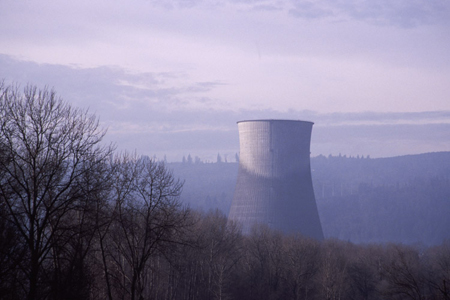
Nuclear reactor technology has allowed the world-wide use of nuclear reactors for energy production. With the world faced with mounting carbon dioxide levels and global warming a concern, nuclear energy provides a low carbon emission alternative to traditional energy sources (World Nuclear Association and MIT study). This aspect of nuclear energy makes it a very attractive energy alternative. With President Obama wishing to expand the United States nuclear power plant program, the question becomes an issue of balance-of-risks.
Accelerating nuclear reactor development provides a low carbon emission energy source; however there is risk associated with the use of nuclear materials. If we do not take advantage of nuclear’s low carbon footprint and instead pursue other, higher carbon footprint strategies, we risk exacerbating global warming issues. There are other options, as well, such as cleaner technologies, emerging energy technologies and reducing fertility rates to decrease population size.
We seek to understand the low probability, high impact, long-tail risks associated with the use of nuclear materials. Since the dawning of the nuclear age, mankind has worked to harness the power of the atom. There have been many benefits from the use of radionuclides. However, there are risks as well.
Risk areas to consider in looking at nuclear energy include:
- Economic, including Externalities
- Design and Construction
- Natural Disasters
- Operations and Management
- Political and Regulatory
- Terrorism, War and Sabotage
- Radioactive Waste Treatment and Storage
We have had experience with nuclear accidents that display some of that high impact, long-tail risk. Previous blog articles have discussed Chernobyl, Three Mile Island and Fukushima (3/12/11, 3/25/11 and 3/28/11).
We have seen historical flooding on the Missouri River which threatened Fort Calhoun Nuclear Plant and Cooper Nuclear Plant in Nebraska. Recently we have seen the large Las Conchas Wildfire threaten the Los Alamos Energy Department facility in New Mexico.
These situations, including those situations where facilities were threatened but not breached, are all reminders that radiation is a serious risk and not simply an abstract probability.
Subscribe to:
Posts (Atom)